
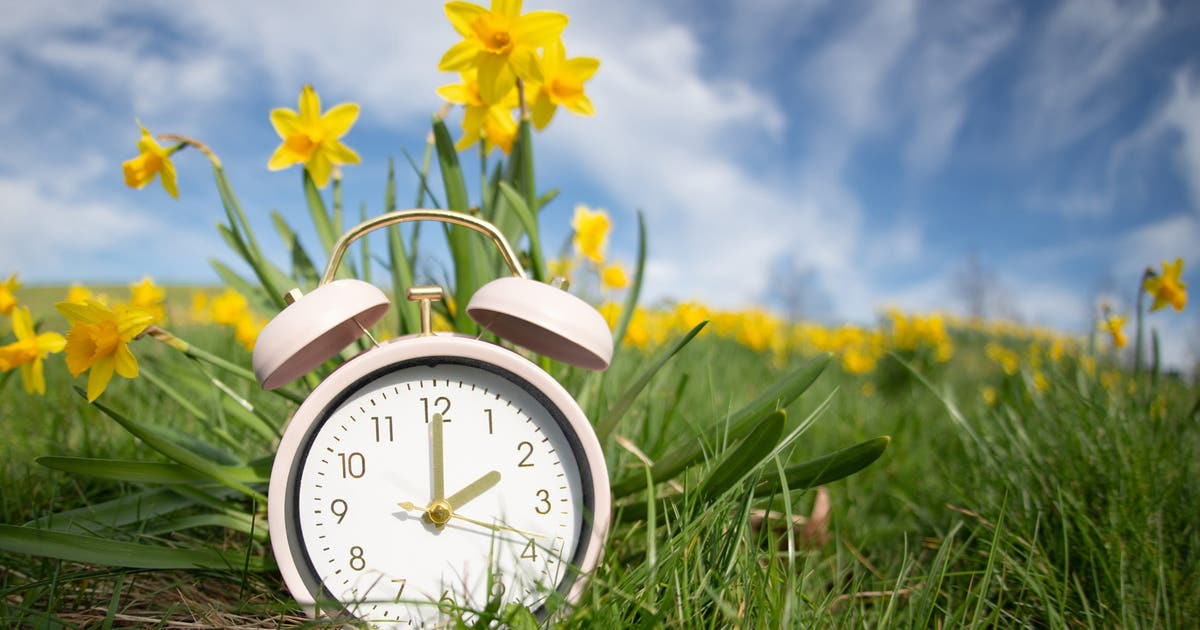
Each year, millions of individuals have to change their clocks due to Daylight Saving Time (DST). This time change is done to put more advantage on the daylight in the longer days of the year. Daylight Saving Time will be experienced once again in 2026 in a number of countries such as the United States, Canada and some parts of Europe.
It is common knowledge that many individuals always question themselves as to when Daylight Saving Time kicks off, when it closes, and whether it still exists today. The awareness of the timing and the causes might allow people to be ready to the clock change and cope with its impact on sleep, employment, and the everyday routine.
This guide covers all the information regarding the Daylight Savings 2026, the most important dates, how it works, why it exists, and which countries celebrate it.
What Is Daylight Saving Time?
The Daylight Saving Time is a system in which the clocks are advanced in time by one hour in the months when the weather is hot to allow more time in the afternoons. During the autumn, the clocks are adjusted a full hour to get back to ordinary time.
The concept of Daylight Saving Time is quite straightforward: by moving up the clock in the spring, people will have more daylight during the evening, which will help them to use less energy by turning on less electricity and take more time to enjoy the outdoors.
Though Daylight Saving Time is observed by many countries, not all countries do it. There are other areas that have already given up the practice due to health, productivity and confusion issues.
Daylight Savings 2026 Start Date
Daylight Saving Time in 2026 on in the United States and Canada is on:
- Sunday, March 8, 2026
At 2 seconds of the morning time, time is shifted to 3 seconds.
This implies that they lose an hour of sleep and have an extended daytime in the evening.
For example:
- When the hour is 1:59 AM, the hour turns out to be 3:00 AM.
- That day, there is no hour between 2:00 AM and 2:59 AM.
- It is on this change that the daylight-saving period begins.
- Daylight Savings 2026 End Date
Daylight Saving Time ends on:
- Sunday, November 1, 2026
- At 2: 00 AM, the time is changed to 1: 00 AM.
- This is referred to as fall back.
- This is a difference unlike in the spring shift where the people enjoy an extra hour of sleep since the hour between 1:00 AM and 2:00 AM occurs twice.
- Once such change has been made, then the standard time applies during the winter months.
The reason why there is Daylight Saving Time.
The Daylight Saving Time notion is more than a century old. The primary idea was to utilize daylight more efficiently and save on energy.
Benjamin Franklin was one of the first advocates of the concept as he proposed that people should wake up earlier to conserve some candles.
The current DST system was however introduced in World War I to save on fuel and energy.
It was subsequently popular in most of the countries.
The major justifications of Daylight Saving Time are:
Energy Conservation
Theoretically, the more time the day is long, the less artificial lighting is required in the evening.
Increased Outdoor Activity
The increased evening hours stimulate outdoor activities and this is favorable to business organizations that deal with restaurants and shops.
Traffic Safety
There are certain studies which indicate that accidents can be minimized by increasing daylight in the evening hours.
List of Countries that practice Daylight Saving.
Daylight Saving Time is not practiced in all countries. Indeed, it is not used in the majority of countries close to the equator as the time of daylight is quite stable throughout the year.
The countries that practice DST are:
- United States
- Canada
- United Kingdom
- Germany
- France
- Australia (only some states)
- Nevertheless, a number of countries no longer operate under the Daylight Saving Time and these include:
- India
- Japan
- China
Clocks in these countries are not adjusted throughout the year.
Current controversy of Daylight Saving Time.
Daylight Saving Time is an issue that has caused controversy in most nations over the last few years.
There are even some legislators and researchers who claim that the system is obsolete and redundant.
Critics state that the shift of the time brings the following problems:
Sleep Disruption
Having lost a single hour of sleep during spring may disrupt the sleep patterns and hamper productivity.
Health Concerns
Research indicates that sudden change in time can have a temporary effect of raising the number of heart attacks and accidents.
Limited Energy Savings
Modern studies have shown that DST might not be as energy saving as thought out initially.
Due to these issues, there are governments that have debated the abolishment of the practice.
The possible reforms in the United States.
In the US, legislators have discussed the legislation to ensure Daylight Saving Time is permanent.
One is a bill titled the Sunshine Protection Act that seeks to abolish the changing of the clock enabling DST to be utilised throughout the entire year.
The proponents believe that permanent DST would allow greater daylight in the evening on an annual basis.
The bill however is yet to be fully implemented in the country.
The Impact of Daylight Saving Time on Everyday Life.
Even though an hour of clock shift is not a big deal, it can affect everyday lives in a number of ways.
Sleep Schedule
After the change of the clock many people need several days to get used to their sleeping patterns.
Work and School
The morning habits may be different with the change of the sunrise.
Technology Adjustments
Majority of the modern gadgets like the smart phones and computers automatically update, yet the manual clocks must be set.
Suggestions to Adapt to the Time Change.
Scholars indicate some options on how to manage the time change more comfortably.
Progressively change sleep pattern.
Before the change, it is possible to go to bed 15-20 minutes earlier to make the body get used to it.
Get sunlight exposure
Outdoor activities assist in balancing the internal clock of the body.
Avoid caffeine at night
Reducing intake of caffeine and screen time prior to sleep enhances the quality of sleep.
The following few measures could help facilitate this process.
Final Thoughts
The next daylight savings will start on March 8, 2026 and finish on November 1, 2026 in those countries that practice daylight savings. Although the concept was initially developed to preserve energy and utilize daylight better, it is still a disputable issue nowadays.
Some nations still carry the practice, some countries have completely dropped it. Daylight Saving Time continues to be an annual phenomenon that can be discussed by millions of individuals across the planet, irrespective of whether the government should retain or eliminate the clock change.
In the meantime, citizens of involved areas must remember to spring forward in March and fall back in November so as to be on track.