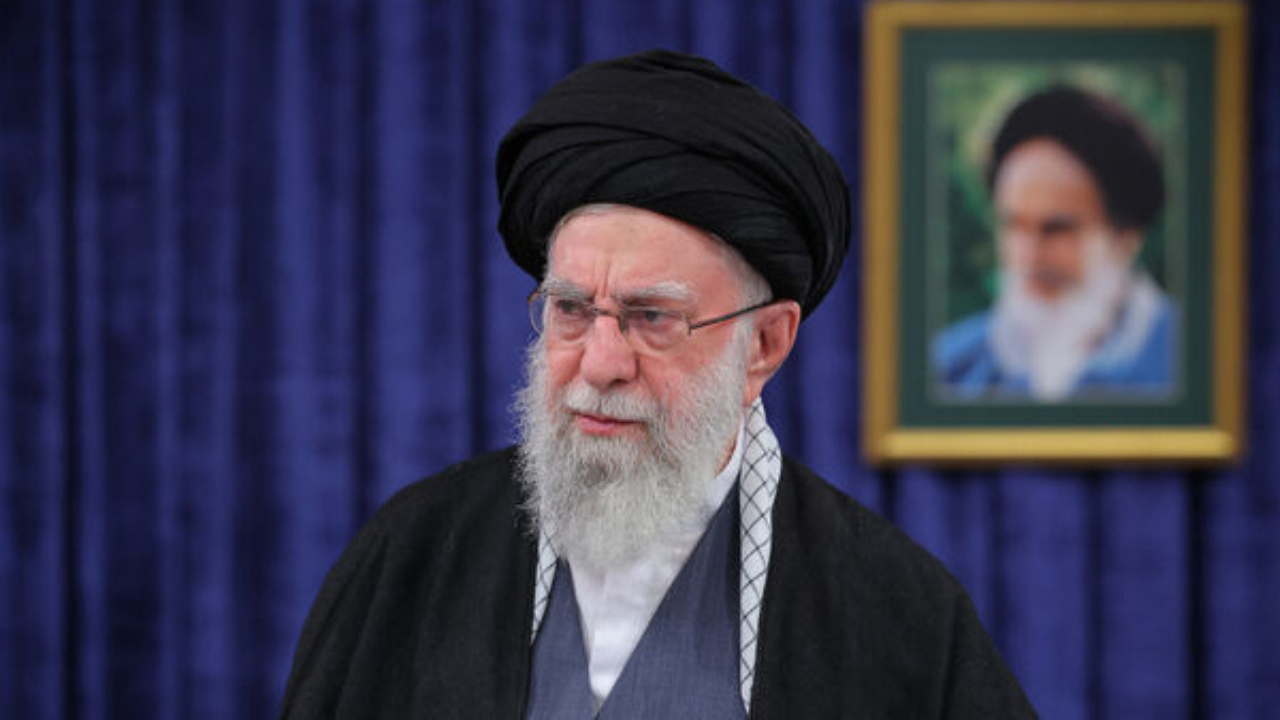
American and Israeli forces struck Iran with a devastating wave of simultaneous air attacks on Saturday morning killing Supreme Leader Ayatollah Ali Khamenei and destroying most of the senior military and political hierarchy of the country in what government officials termed an anticipatory response to the nuclear and missile strength of the Islamic Republic.
The round of strikes, which had started soon after dawn according to Tehran time, struck in the capital and in various other larger cities. Smoke had risen over the government buildings, military installations and the headquarters of the Iran state broadcaster. The size and accuracy of the attack came as a surprise and since it was during the broad daylight the timing of it was seen as a signal of massive dominance in the air.
The US President Donald Trump affirmed that the US took part in a video released on his Truth Social social media, indicating that the mission was meant to protect American nationals by eradicating the looming dangers of the Iranian government. He urged the people of Iran to stay in their homes and then after the strikes ceased, they must take over their government.
Israeli Prime Minister Benjamin Netanyahu explained the operation as a collective action to make sure that Iran is not given the nuclear bombs to gain power to intimidate the entire humankind and he was therefore urging Iranian people to break the chain of tyranny. State television in Iran announced the death of Khamenei hours after the first attacks.
The revolution guard corps of Iran also declared to strike back against US bases and its assets in the region under Truthful promise 4, and they have attacked US positions in Bahrain, the UAE, Qatar and Jordan and Kuwait. Saudi Arabia objected to what it described as open Iranian aggression, and vowed to offer its total support to its neighbours in the Gulf.
The reaction of the world was quite quick and divided. The escalation was denounced by UN Secretary General Antonio Guterres who said that it had severely compromised international peace and security and demanded a complete ceasefire. The strikes were seen as an aggression by Russia. France, Germany and the UK indicated that they had not been involved but encouraged Iran to resort to a negotiated solution.
Oman, the mediator of US-Iran nuclear negotiations in the days before the attack, was outraged. The Foreign Minister, Badr Albusaidi, wrote that once again active and serious negotiations are being sabotaged and the US should not take it further.
As the Supreme Leader is dead and the future of Iran politics is highly unpredictable, it is a warning to the region that it has entered highly unexplored territory. This new phase of war is existential and it is evidently survival of regimes, according to Dr Sanam Vakil of Chatham House. Neither is it very likely to be soon terminated.
Frequently Asked Questions
Q: What was the incident in the Iran attack?
A: The American and Israeli troops unleashed coordinated air attacks on Saturday morning on the military bases, government structures, and command centers in Tehran and other cities. The assassination of Supreme Leader Ayatollah Ali Khamenei and the assassination of a good part of the top political-military leadership of the country were the result of the strikes.
Why is the US and Israel doing this now?
A: The escalating nuclear programme in Iran was cited by the officials as the key reason to do so. According to Trump the aim was to remove imminent threats and have Iran never be in possession of a nuclear weapon. Israel termed the operation as a preventive attack on an existential threat.
Q: Has Iran retaliated?
A: Yes. The IRGC of Iran announced its strikes on the positions of US bases and assets in the region, including Bahrain, UAE, Qatar, Jordan and Kuwait.
Q: What has the international community done about that?
A: The responses have been divided taking a strongly negative stand. The UN demanded an immediate cease fire. Russia criticised the strikes. France, Germany and the UK, called on Iran to find an agreed solution. Saudi Arabia promised to stand by any Gulf countries that were affected.
Q: What happens next for Iran?
A: There was an extreme political vacuum in the country at the time of the death of Khamenei. Analysts fear that the conflict will not end in the near future with one describing it as an existential one to the Iranian regime.
Q: Does this have any impact on the 2026 FIFA world cup?
A: Potentially. Iran are also the qualifiers to the tournament which is being hosted by the US this summer. The Iranian federation of football has raised eyebrows on whether the team would participate but FIFA has insisted that Iran would still play.